
The No-Stress Guide to Boat Storage Regulations in Punta Gorda, FL
The No-Stress Guide to Boat Storage Regulations in Punta Gorda, FL
—
June 1st, 2026
The boat stays in the driveway most weeks without incident. Then the pattern shifts. A Code Compliance letter shows up taped to your mailbox, listing a violation date you didn't track, referencing a permit requirement nobody mentioned when you bought the house, and setting a deadline that leaves less margin than you'd expect for finding another parking solution.
Punta Gorda's code allows single watercraft parking between 7 a.m. and 7 p.m. without a permit, reasonable on paper until you realize overnight storage means applying for a watercraft parking permit every time you need the boat ready before sunrise. Boat storage regulations in Punta Gorda, FL operate citywide, but enforcement patterns shift depending on which neighborhood you're in.
What works in one part of Punta Gorda doesn't necessarily hold up the same way in Special Residential Overlay districts like Punta Gorda Isles or Burnt Store.
Boat Storage in Punta Gorda, FL: What the Code Actually Says
One watercraft per residence, parked on the paved driveway or within the public right-of-way off the paved roadway, between 7 a.m. and 7 p.m. That's the baseline according to Punta Gorda's official code. After 7 p.m., you need a permit. The permit is free, but it's not automatic and applying for it every time you want the boat ready the night before a morning launch becomes its own routine.
Punta Gorda boat parking rules treat overnight permits differently than daytime parking. The overnight permit covers two consecutive nights, four times per calendar year. That math works, or it doesn't depend on how often you use the boat. If you launch most weekends between November and April, four permitted overnight periods cover about a month's worth of boating.
The rest of the season you're either moving the boat by 7 p.m. daily or figuring out something else. The two-night limit is cumulative. Multiple permits can't be combined to allow a watercraft to remain on the driveway for more than two consecutive days, which means even if you have permits left for the year, you can't stack them to cover a long weekend.
Special Residential Overlay Districts Run Stricter Rules
Punta Gorda Isles, Burnt Store Isles, and Burnt Store Meadows operate under Special Residential Overlay (SRO) rules. Punta Gorda Isles boat regulations match citywide overnight permit limits (two consecutive nights, four times per calendar year), but these neighborhoods tend to see closer Code Compliance attention.
The regulation is the same citywide, but enforcement patterns in higher-profile neighborhoods often run tighter. More eyes watching means violations get reported faster, and the window between notice and fine typically runs shorter than it does in other parts of the city.
The 7 a.m. Cutoff Creates a Launch Problem
You can't prep the boat the night before if the night before means after 7 p.m. Sunrise launches (popular here because Gulf water stays calmer early) require either waking up early enough to rig everything by dawn or parking the boat somewhere overnight that isn't your driveway.
The permit solves this for two nights, four times a year. For everything else, you're either prepping at 6:30 a.m. or moving the boat to storage the night before and picking it up on the way to the ramp. If the facility isn't actually on your route to the water, the detour starts eating into launch time before you've even left the neighborhood.
What Actually Triggers Code Compliance
Code Compliance in Punta Gorda typically operates on complaints, which can be submitted anonymously across most Southwest Florida jurisdictions. Your neighbor doesn't need to confront you directly or provide their name if the boat sits there after hours.
Code enforcement processes across Southwest Florida start with courtesy notices before moving to formal violations. The timeline varies by authority, but the notice allows voluntary compliance before fines begin.
Why the Regulation Works for Some Owners, Not Others
Nobody in the process is wrong, exactly. Punta Gorda's official code allows daytime boat parking and provides a permit for limited overnight use. Code Compliance enforces what's written. Your neighbor filing the anonymous complaint isn't breaking any rule by doing so.
What the regulation doesn't account for is that most boat owners who live near Charlotte Harbor and the Peace River use their boats more than four weekends a year, and most of them would prefer not to wake up at 5:30 a.m. every Saturday just to stay compliant with a 7 a.m. cutoff.
The structure makes sense for someone who boats occasionally. For someone who uses the boat regularly between November and April, the math stops working about a month into the season.
Who Benefits from the Four-Times-Per-Year System
If you're a snowbird arriving in November and departing in April, the four-times-per-year permit cadence can cover your whole season if you time it carefully. Two nights every six weeks is enough to keep the boat accessible for most weekend launches without violating the overnight rule.
Getting a boat storage permit in Punta Gorda works when you use the boat less frequently (once a month, a few times during peak tarpon season, a handful of trips when out-of-town guests visit). You're not fighting the system because you're not using it often enough for the limits to bind.
The friction shows up for people who fall in between. More than occasional use but not frequent enough to justify paying for year-round storage. That's where the regulation becomes less of a solution and more of a calendar you're trying to work around.
What "On the Premises" Means in Practice
In SRO districts, no vehicle can be parked in the front, side, or rear yard of any developed residential property. The boat must sit on the paved driveway, not the lawn, side yard, or behind the house unless there's pavement back there.
If your driveway can't fit the boat and trailer without blocking the sidewalk or extending into the street, on-premises parking becomes difficult. The regulation assumes that the driveway has a lot of space. If it doesn't, you're already outside the allowable configuration before the 7 p.m. cutoff even applies.
When Off-Site Storage Makes More Sense Than Permits
Month-to-month outdoor storage makes sense when the permit limits don't match how often you're using the boat. The four-times-per-year overnight allowance works until it doesn't, and when it stops working, you're either looking at daily moves by 7 p.m. or paying for a spot that keeps the boat ready without the clock running.
The question isn't whether the regulation is reasonable. It's whether the regulation fits how you use the boat. If it doesn't, boat storage in Punta Gorda fills the gap between what the city allows at your house and what your actual launch schedule requires.
When you're comparing boat storage in Punta Gorda, the questions that actually matter when you're comparing facilities come down to access hours (you need 24-hour if you're launching at dawn), proximity to the ramp (the closer the storage, the less the detour costs you), and whether month-to-month leases let you adjust when snowbird season ends and your launch frequency drops.
Some facilities sit near enough to Charlotte Harbor and the Peace River ramps that the storage-to-launch detour adds ten minutes instead of forty. That matters more than it sounds like it would when you're making the trip twice every weekend.
How the Calendar Year Permit Limit Actually Works
You can't stockpile permits. The four-times-per-year limit resets January 1st, but each permit still covers only two consecutive nights.
Burn through all four permits by March, and the rest of your season runs under the 7 a.m.–7 p.m. Rule with no overnight exceptions. That's the reality for owners who launch every weekend during peak season. The math doesn't stretch far enough to cover regular use between November and April.
What Doesn't Count as a Violation
Parking the boat between 7 a.m. and 7 p.m., on your paved driveway that's always allowed; no permit required. You can load gear, rinse the boat after a trip, or leave it hitched to your truck for the afternoon without triggering a violation.
The violation clock starts at 7 p.m. Code Compliance cases start from neighbor complaints or routine neighborhood checks, not real-time monitoring. The risk comes from the boat sitting overnight without a permit, not from crossing the threshold by fifteen minutes while you finish hosing down the deck.
When Off-Site Storage Becomes the Path of Least Resistance
If the permit limits are tighter than your launch schedule, if your driveway doesn't fit the boat without blocking something, if you're in an SRO district where enforcement happens faster than you expected, or if waking up at 5:30 a.m. to rig the boat before the 7 a.m. launch window just isn't something you want to keep doing, storage removes the variable you're managing around.
The monthly cost replaces the permit juggling, the early-morning prep routine, and the risk that a neighbor files a complaint the one weekend you needed the boat ready overnight and didn't have a permit left to use. The boat stays ready; the launch timing works on your schedule instead of the city's cutoff, and the only clock that matters is the one tracking when you want to be on the water.
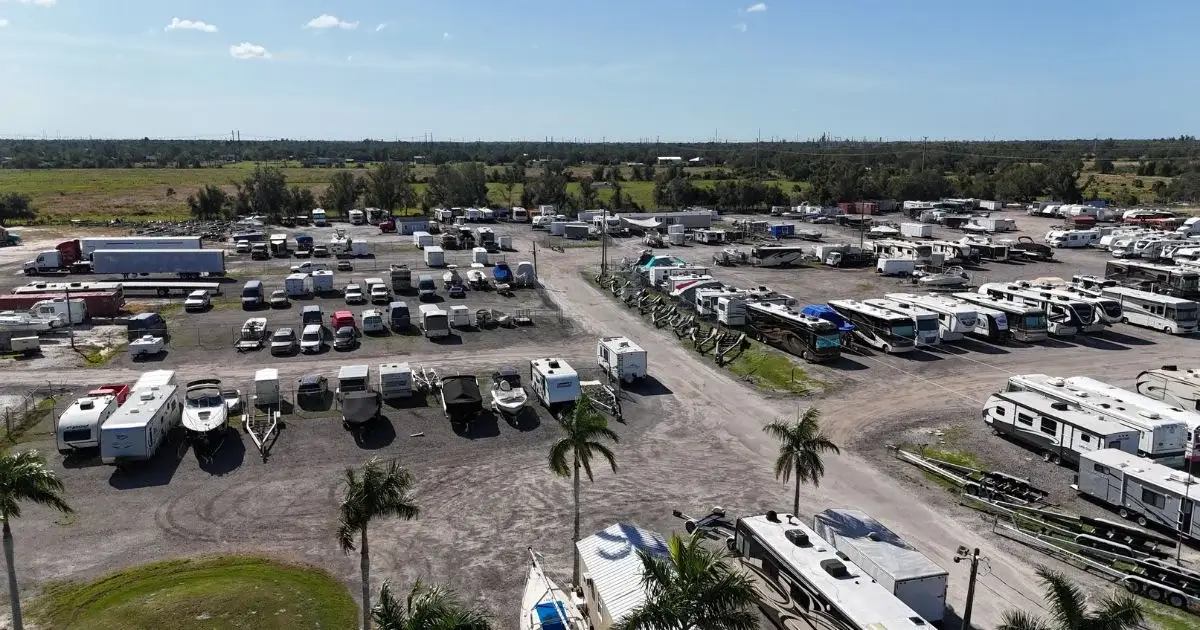
Month-to-month leases and 24-hour access make Getaway's Punta Gorda location work for owners who don't want to manage overnight permits. The facility sits near Charlotte Harbor, and availability runs month-to-month with no long-term commitment. Check what's open at getawaystorage.com or call (941) 841-1743.
Gateway Storage Blog
Categories