
Florida RV Storage & Organizing Hacks That Work
Florida RV Storage & Organizing Hacks That Work
—
May 1st, 2026
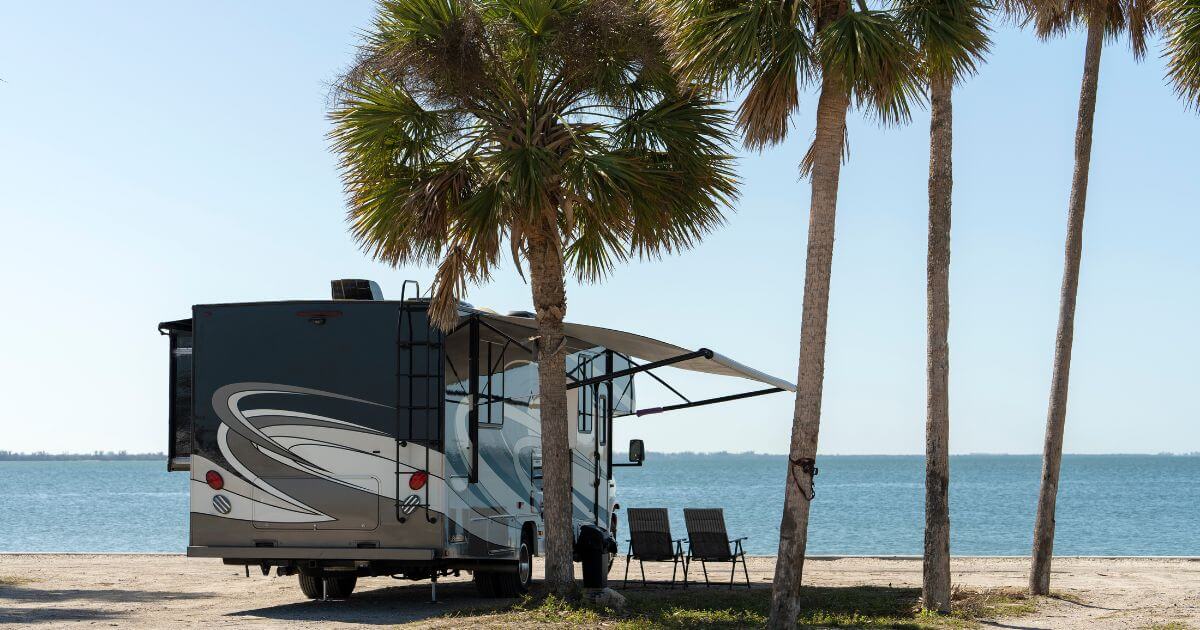
Owning an RV in Florida means you've got one of the best backyards in the country: state parks, Gulf beaches, and campgrounds most people only see in photos. Southwest Florida alone gives you Myakka River State Park, the Peace River corridor, and easy access to the Gulf, all within a few hours of Punta Gorda.
But between trips, Florida RV storage comes with its own set of challenges. Heat, humidity, and five months of afternoon storms that don't care what you left inside. The same climate that makes year-round RVing possible is the one working on your seals, cushions, and wiring every day the rig sits parked.
How you organize and prepare before you lock it up determines what condition it's in when you're ready to roll again. Get it right and you're back on the road in an hour. Get it wrong, and you're dealing with mildew, dead batteries, and a storage bay that looks like it lost a fight.
Start with the Bay You Always Ignore
Most RV owners organize the living area and forget the exterior storage bays — the ones underneath, along the sides, low to the ground. In Southwest Florida, those bays take the worst of it: afternoon thunderstorms kicking up splash, salt-laden Gulf air working through every gap, humidity settling in wherever air doesn't circulate.
Start there. Pull everything out. Wipe down the interior with a dry cloth, look for water intrusion marks along the edges, and check the seals around the bay doors before you put anything back. A failed seal in October means everything stored there by February has been sitting in condensation.
Reorganize those bays by access frequency. Things you'll need mid-storage (a tow kit, an emergency contact card for the facility, your insurance paperwork) go near the front. Everything else can go deeper. Use plastic bins with locking lids rather than cardboard and keep them off the bay floor with rubber shelf liners underneath. Cheap fix, real difference.
What Florida Humidity Does to Everything You Forgot to Think About
The National Weather Service puts 70% of Southwest Florida's annual rainfall inside a five-month summer window. That's the season a sealed, unventilated RV sits in outdoor storage absorbing it. The EPA recommends keeping indoor spaces below 60% relative humidity to prevent mold growth, a threshold a closed RV clears easily by June.
Interior humidity climbs well past that threshold, and the foam, fabric, and wood inside absorb it steadily over months. Cushions are the clearest example. Leave them in place through summer and they'll smell like a wet dog by August.
The fix isn't complicated. Just store them vertically, not flat, so air can move around them. Some owners take the main cushions out entirely and store them in a climate-controlled space. That's worth it if the cushions are quality. If they're original equipment from a 2009 model year, probably not.
Moisture absorbers work, but you need more than one. A single DampRid container in the main living area doesn't cover a 30-foot RV. Put one in each section (bedroom, bathroom, kitchen area, living space) and check them before you close.
The RV Industry Association recommends replacing moisture absorbers every 30–45 days during peak humidity months, not waiting until they're full. By the time they're visibly saturated, they've been ineffective for a while.
Organize for the Climate, Not the Floor Plan
The instinct is to organize the way you use the RV: kitchen stuff in the kitchen, tools in the tools bay, outdoor gear near the door, and so on. That works fine when you're camping. It's the wrong system for Florida RV storage.
Organize by what the climate will attack first. Anything with leather, fabric, or foam goes somewhere with airflow. Electronics and batteries get pulled out or stored in sealed containers with silica gel packets. Food gets removed entirely; not most of it, all of it. That includes sealed cans; condensation cycles inside cabinets can rust them from the outside faster than you'd expect.
Your cleaning supplies can stay but check them. Products with ammonia or bleach off gas in a sealed, hot space. A summer in Punta Gorda storage, where afternoon temps regularly hit the high 90s inside a parked RV, can turn a loose cap into a problem. Seal them in a plastic bin or move them out.
One thing worth doing before you leave: take a photo of how each storage area is organized. Six months later, you'll have forgotten where you put the shore power adapters, and rooting through a reorganized bay at 7 a.m. before a trip is a bad way to start the season.
The Wiring and Connections Nobody Checks
Florida's outdoor storage environment is harder on connections than most owners expect. Salt air accelerates oxidation on exposed electrical contacts. Rodents (and yes, they're active even at well-managed facilities) chew through wiring when they find something warm and undisturbed.
Before storing, disconnect the shore's power cable and store it inside, not coiled up and left outside. Check your battery terminals and apply a thin coat of dielectric grease if you see any white buildup. If you're leaving the battery connected, a trickle charger is worth the setup. Deep discharge through a Florida summer shortens battery life significantly.
For the wiring runs you can see: look for anything rubbing against a sharp edge, anything with cracked insulation, any connector sitting in a low spot where water pools. These aren't things that break during storage — they’re things storage reveals. The problem was always there; months of sitting just gave it time to finish.
Spring and fall in Charlotte County see overnight lows drop 30 degrees or more below afternoon highs. That daily cycling expands and contracts seals, connections, and rubber components until a small crack becomes a real one.
The checks that feel overkill in October are the ones that save you a repair bill in April. If you want a fuller pre-storage checklist, the process for preparing your RV for storage in Florida covers the mechanical side in more depth.
Vertical Space Is Where Florida RV Organization Falls Apart
Most storage bays are deeper than they need to be for what people put in them, and most RV owners stack things flat because it's faster. The problem with flat stacking in Florida is that anything on the bottom of a stack in a warm, humid bay is also the thing that gets forgotten — and the thing that develops mold, rust, or a smell before you notice.
Go vertical where you can. Pegboard panels cut to fit a bay wall hold tool without stacking. Hanging organizers inside cabinet doors add storage without floor space. Mesh pockets mounted on interior walls keep small items accessible and visible.
None of these are expensive. All of it makes the difference between a bay you can use mid-storage and one you avoid opening because it's too much to deal with.
Labeling sounds obvious, but the detail matters: label the outside of bins, not just the lids. When bins are stacked, you read the side, not the top. And labeled by contents, not category; "gray water hose + adapters" is useful at 6 a.m. "plumbing" is not.
What Outdoor Storage Actually Requires from You
Outdoor RV storage in Florida is different from a climate-controlled unit in a northern state. There's no buffer. What's happening outside — the sun, the rain, the salt air, the heat — is happening to your rig. That's not a reason to avoid it; it's a reason to be deliberate about how you set it up.
A good tire cover isn't optional in Southwest Florida. UV degradation on exposed sidewalls over a summer is real, and the tire manufacturer's warranty doesn't cover it. Vent covers that allow airflow while blocking rain help manage interior humidity without trapping heat.
A quality RV cover, if you use one, needs to breathe. A non-breathable cover in Florida heat creates a greenhouse effect that does more damage than the sun it's blocking.
The common mistakes Florida RV owners make in storage often come down to treating outdoor storage like indoor storage and being surprised when the results are different. The organizing hacks above are only useful if the basics (sealing, covering, airflow) are handled first.
Choosing a Facility That Doesn't Create New Problems
Not all outdoor storage in Southwest Florida is set up the same way, and the facility itself affects how your organizing holds up. Drainage matters more than most listings mention — a lot with poor drainage after heavy rain leaves your rig sitting in standing water, and Southwest Florida gets a lot of heavy rain.
Fencing, gating, and surveillance matter for obvious reasons, but also because a facility that's actively managed responds faster when something goes wrong.
Security features in Florida RV storage facilities worth looking for go beyond the basics. 24-hour access, on-site management, and good lighting all affect how usable and how safe the facility actually is.
Once the organizing is done and the rig is ready, the last piece is finding somewhere that works for it. Contact Getaway's Punta Gorda location to check availability and see what fits your setup.
Gateway Storage Blog
Categories